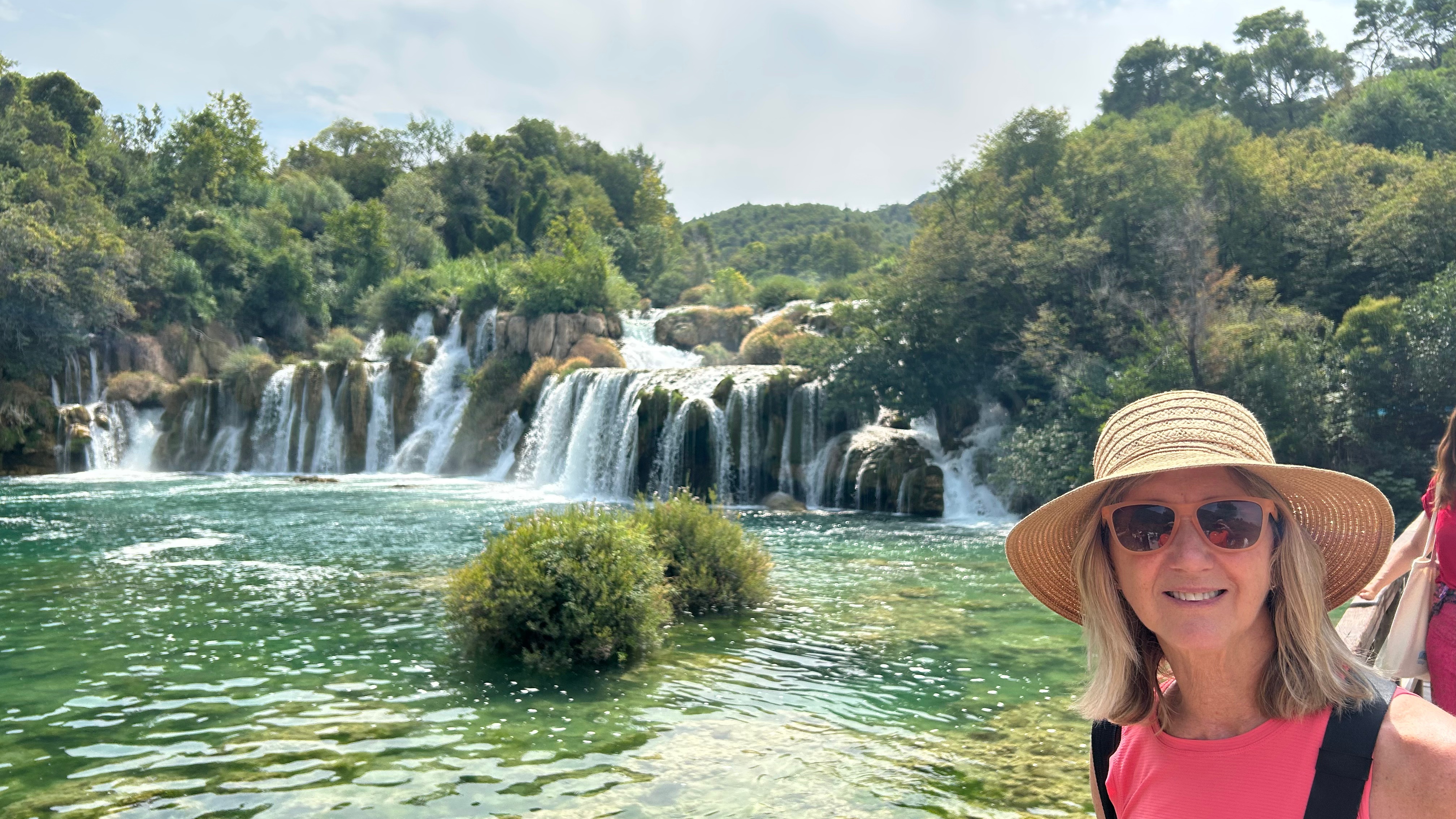
Week 601 · Split & Krka National Park, Croatia
Split &
Next stop was Split, Croatia, where we did a day trip to Krka National Park — famous for its waterfalls and clear water. The region is built on limestone so there are a lot of caves and underground rivers and the water is filtered so it is very clear.
We had a guide on the way to Krka — as well as a fellow passenger who felt compelled to try to change our hike through the park as she had been on this tour before and didn't think we were "going to the right places" and 2 hours in the park was not enough. She continued to argue the whole time we were not seeing the best waterfalls — that may have been true, but we were clearly on the standard highlight hike. She was trying to convince other passengers to join her rebellion and wasn't understanding that the boat is leaving at a fixed time. It was cloudy at first and the waterfalls were small in the early part of the hike, but by the end the sun was out and the water became bright blue contrasting with the green foliage and it was pretty spectacular.
The Krka River flows through karst limestone terrain, which acts as a natural filter for the water. The result is exceptional clarity and the distinctive turquoise-blue colour visible in sunlight. The more famous Plitvice Lakes — another couple of hours away — work on the same geological principle. Krka is less visited and more accessible as a day trip from the coast.
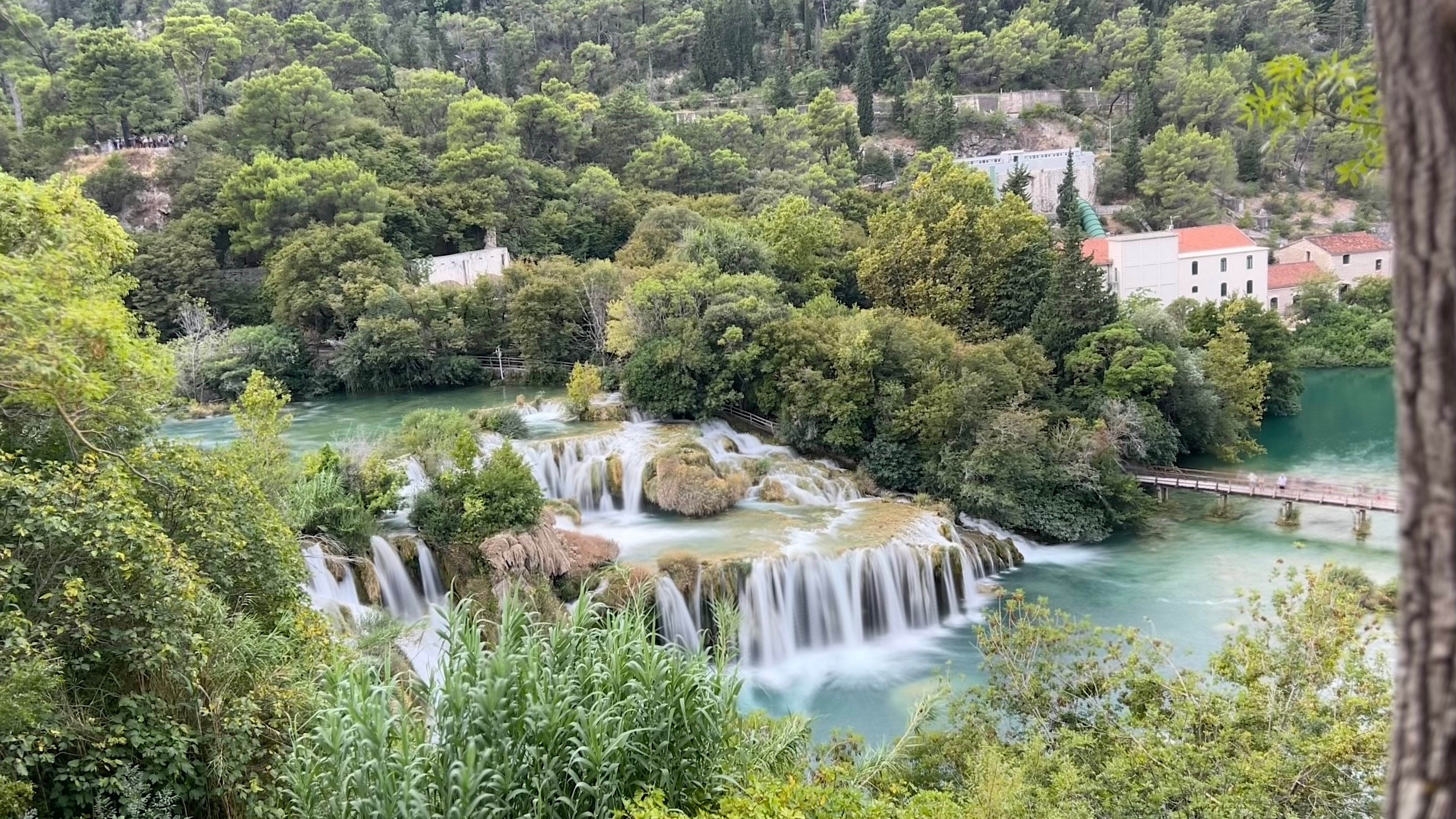
"It was cloudy at first and the waterfalls were small — but by the end the sun was out and the water became bright blue contrasting with the green foliage and it was pretty spectacular."

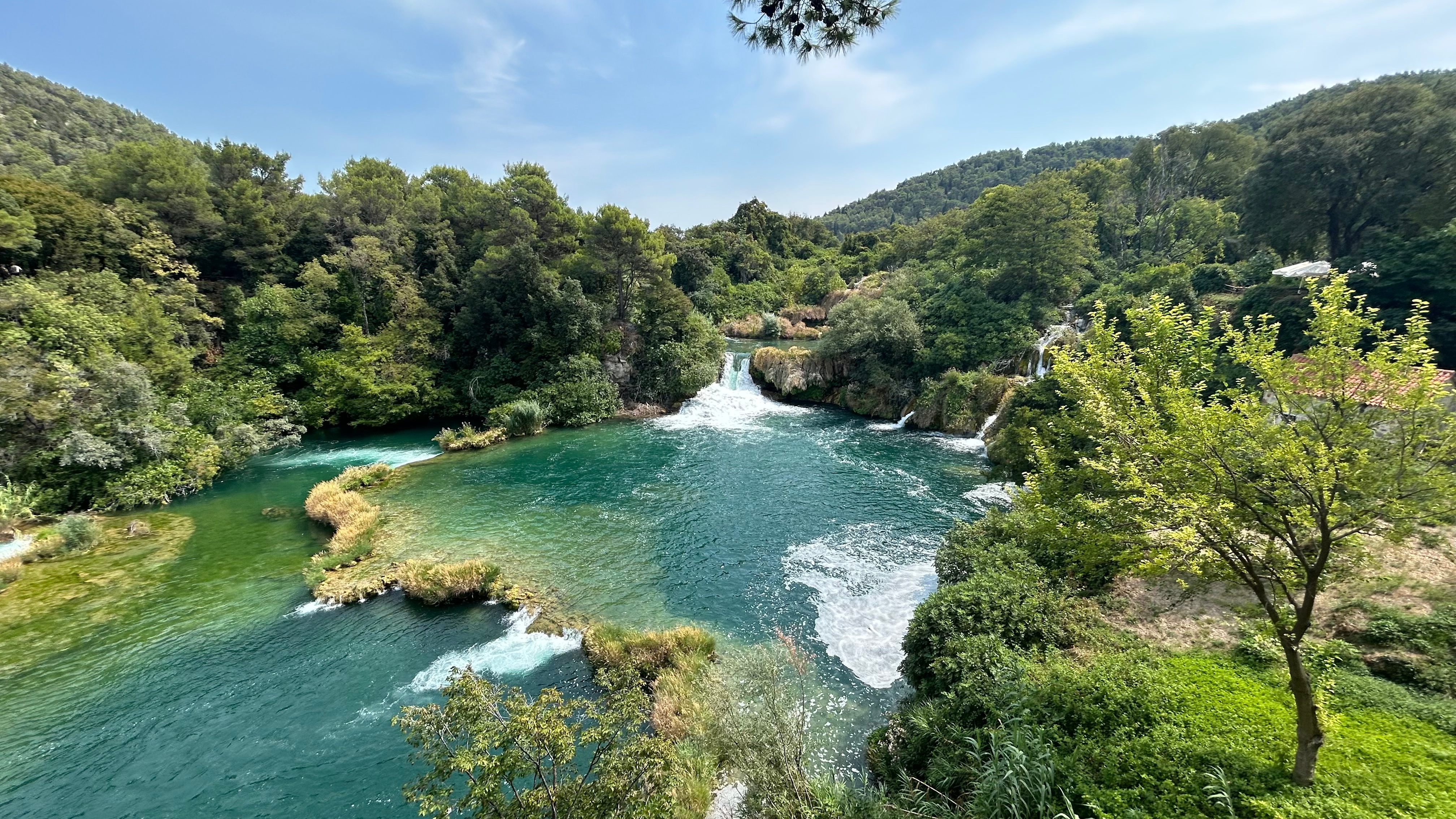
We did a nice short hike about the lake and eventually arrived at the main falls — initially overcast, but when the sun came out it transformed into a much more colourful experience with the turquoise water and the green forest. The tour guide was pretty good — but as the day wore on, she shared more on her disappointment that Split had gone from a strong manufacturing city to tourism. "We used to make cars — now we sell t-shirts from China." She didn't talk much about the Homeland War from the 1990s — just mentioning it briefly.
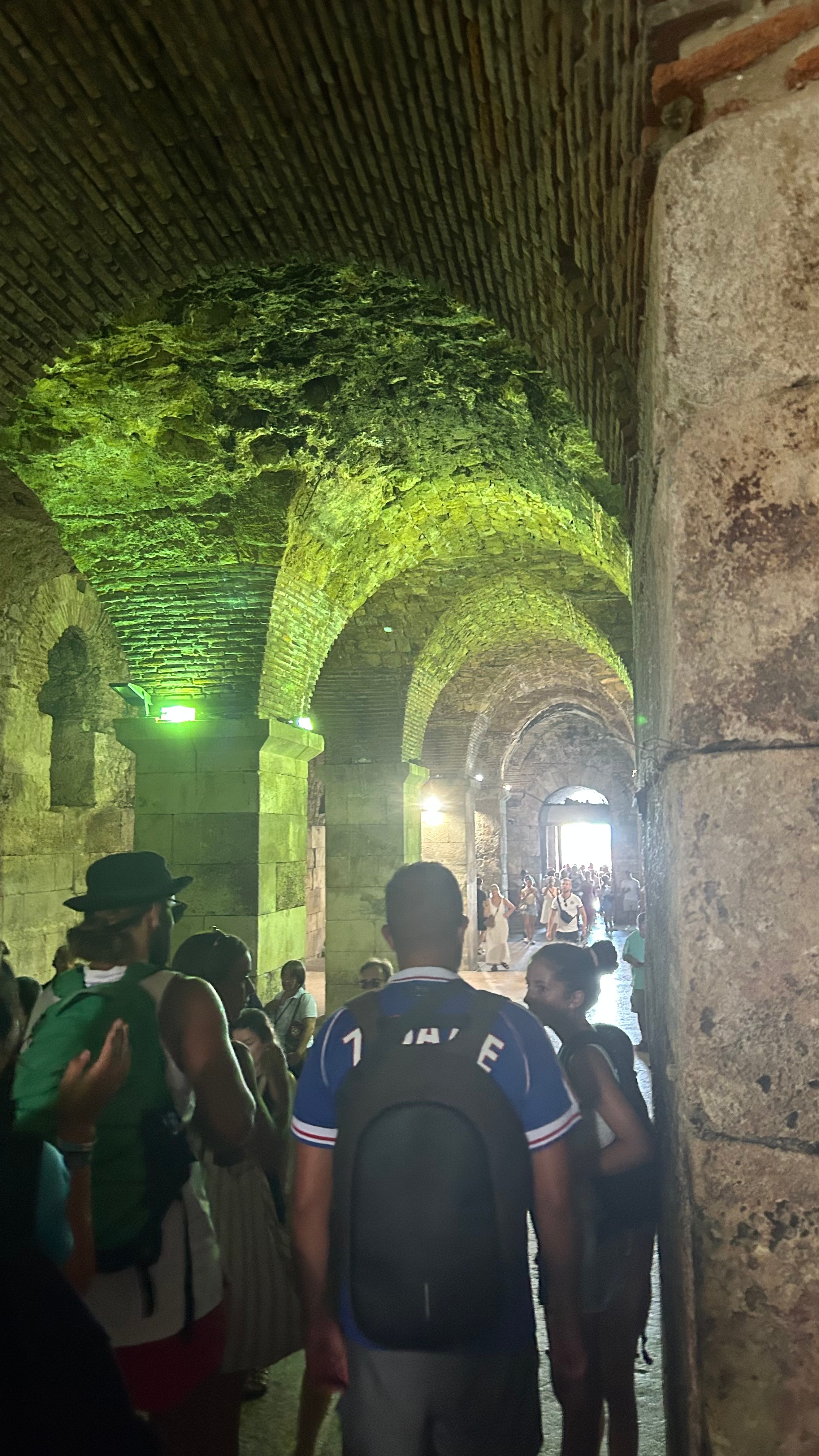
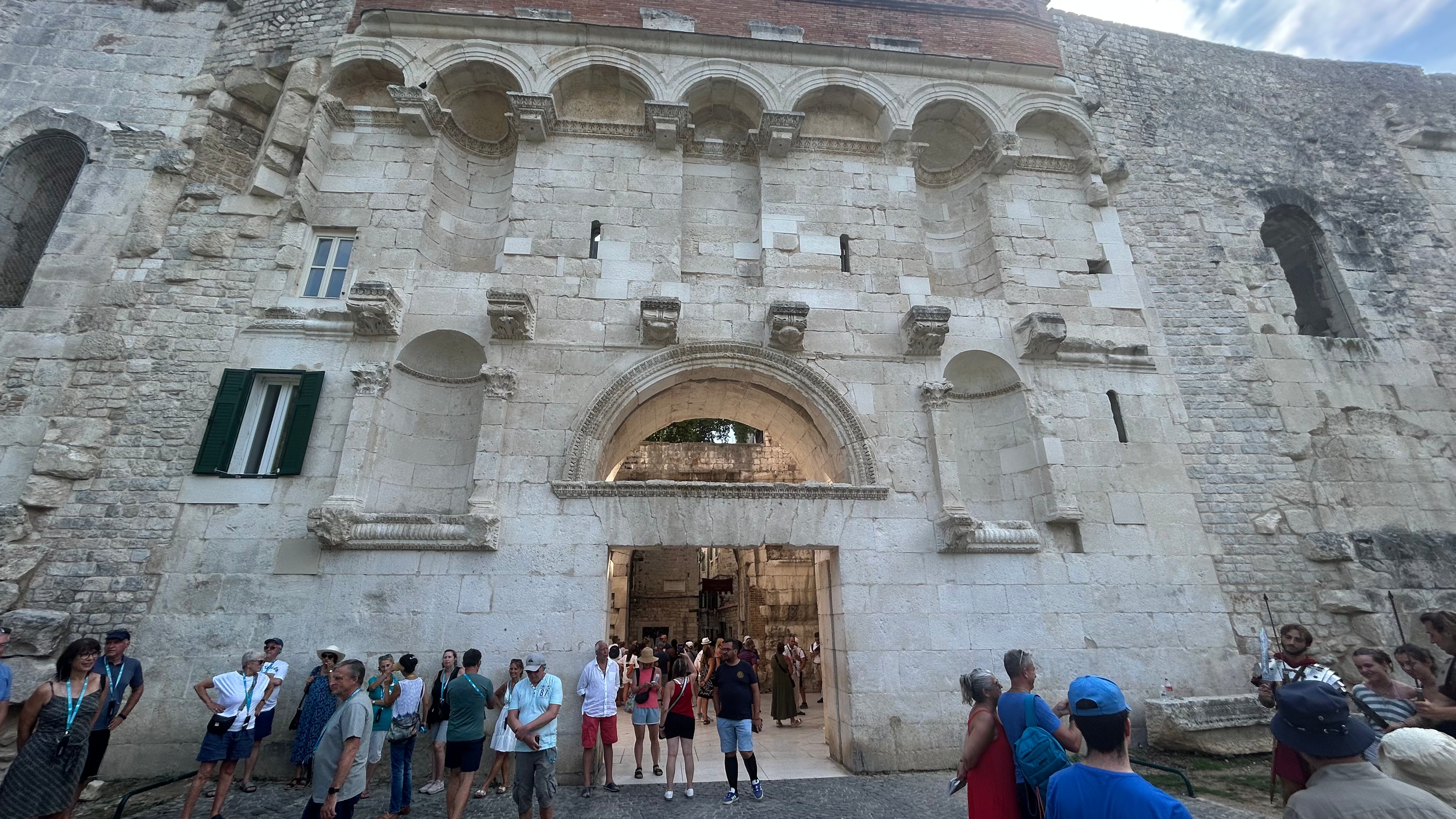
We returned to Split and got some time within the walled city walking around — interesting but a much smaller area than Dubrovnik or Kotor. On the return drive to Split, our guide (who was younger than 50) started to talk about how Split was the industrial heart of Yugoslavia and no one ever visited as a tourist, and pointed to the communist concrete tower blocks and said "they used to be filled with workers in the factories — now just people trying to get by on the tourism trade and sell people stuff from China." But she was very nice and was thrilled to get a selfie with Terry.
"We used to make cars — now we sell t-shirts from China."
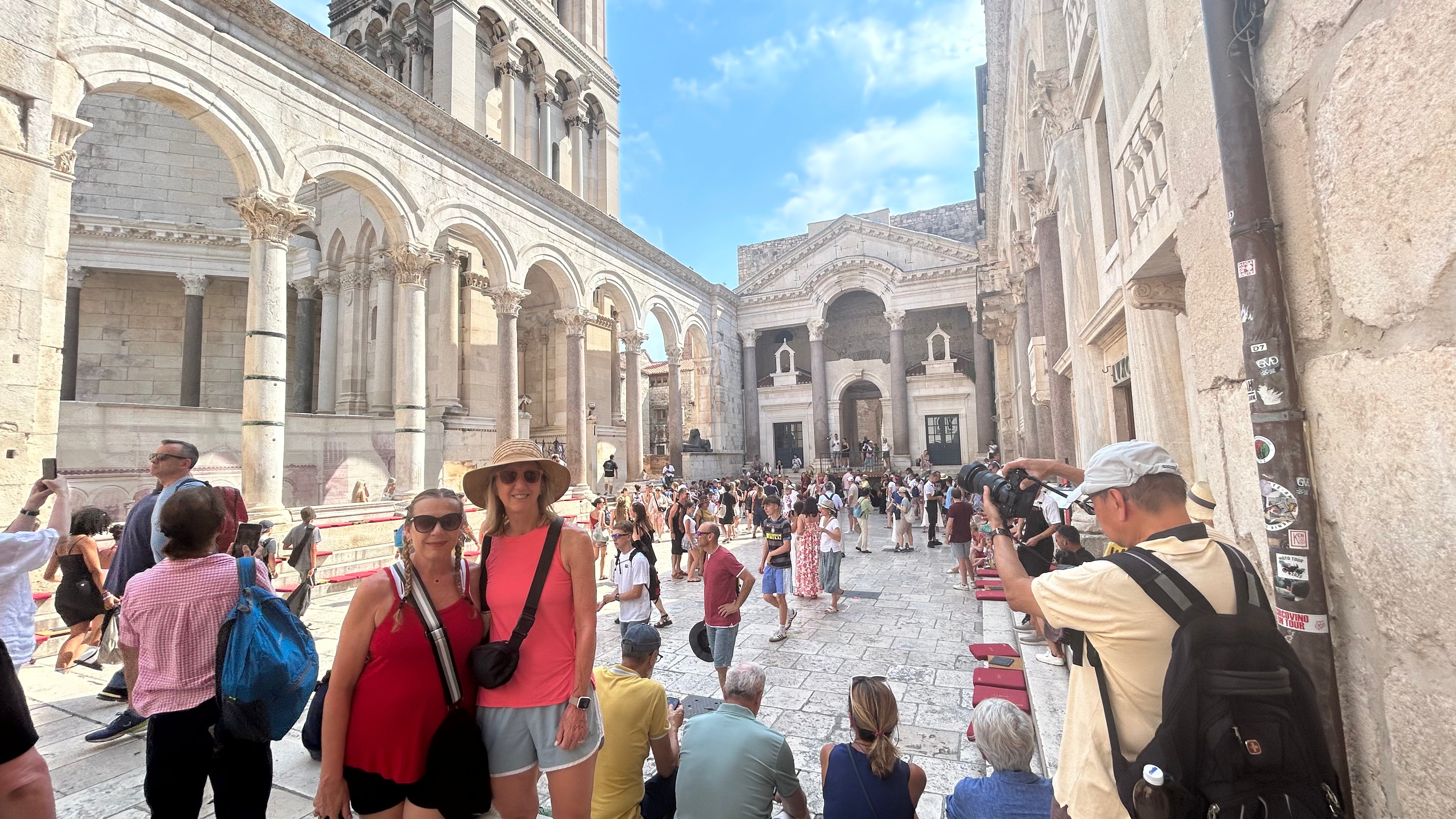
We had a couple of hours in Split — the old town is smaller than Dubrovnik and Kotor, but more impressive in some ways, with the adjacent parks and squares nice too. This was an example of a great place to stay for dinner and visit different places at night — but on a cruise you are out by 6pm.

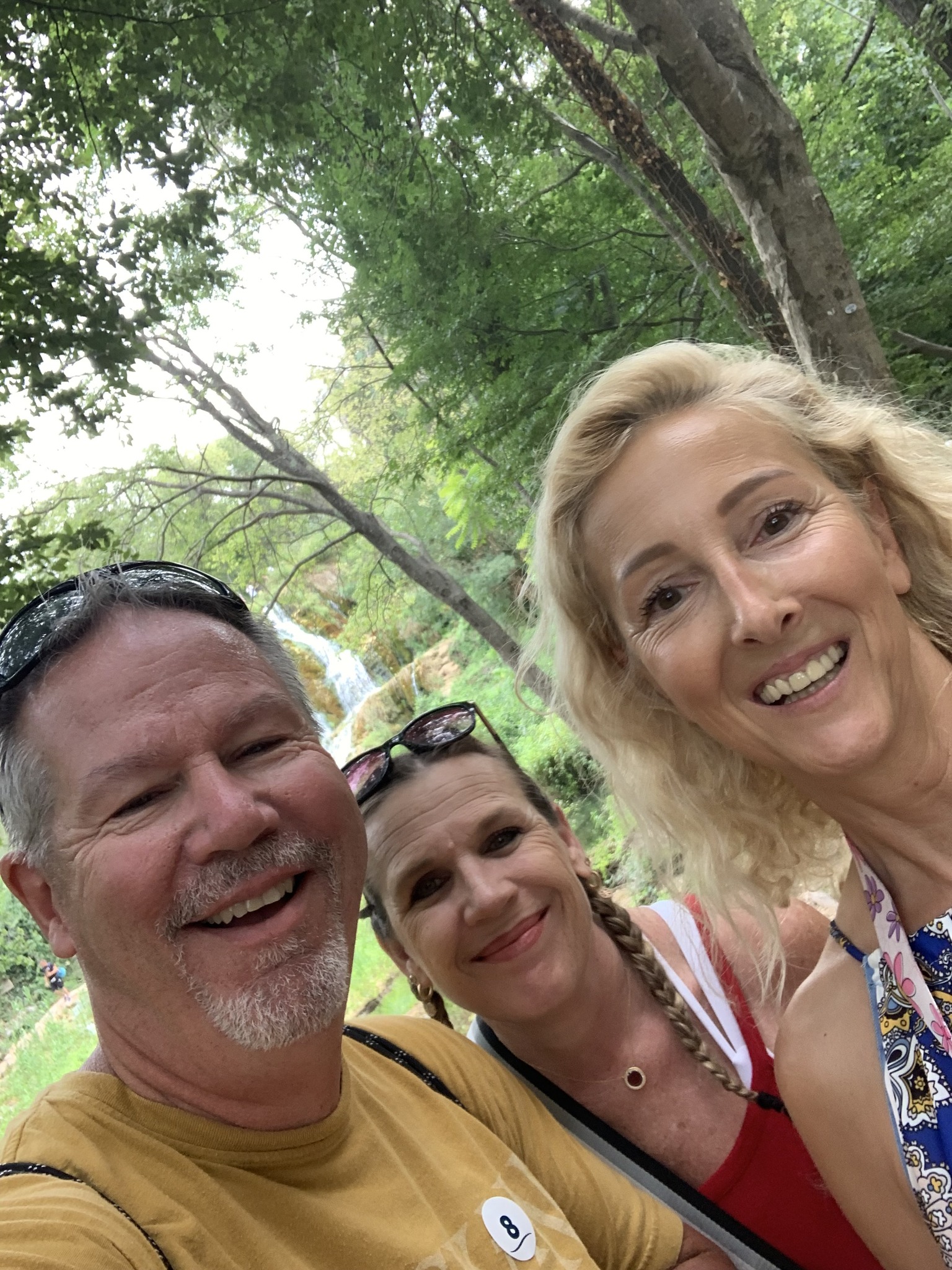
Terry, Tina, and our guide — she was younger than 50, had grown up in the Yugoslavia that no longer exists, and had opinions about what came next. She was also very happy to get a selfie with Terry, which she got.
Split's old town is built inside and around the walls of Diocletian's Palace — a Roman emperor's retirement complex from around 300 AD. The palace walls still define the neighbourhood. About 3,000 people live inside them.
